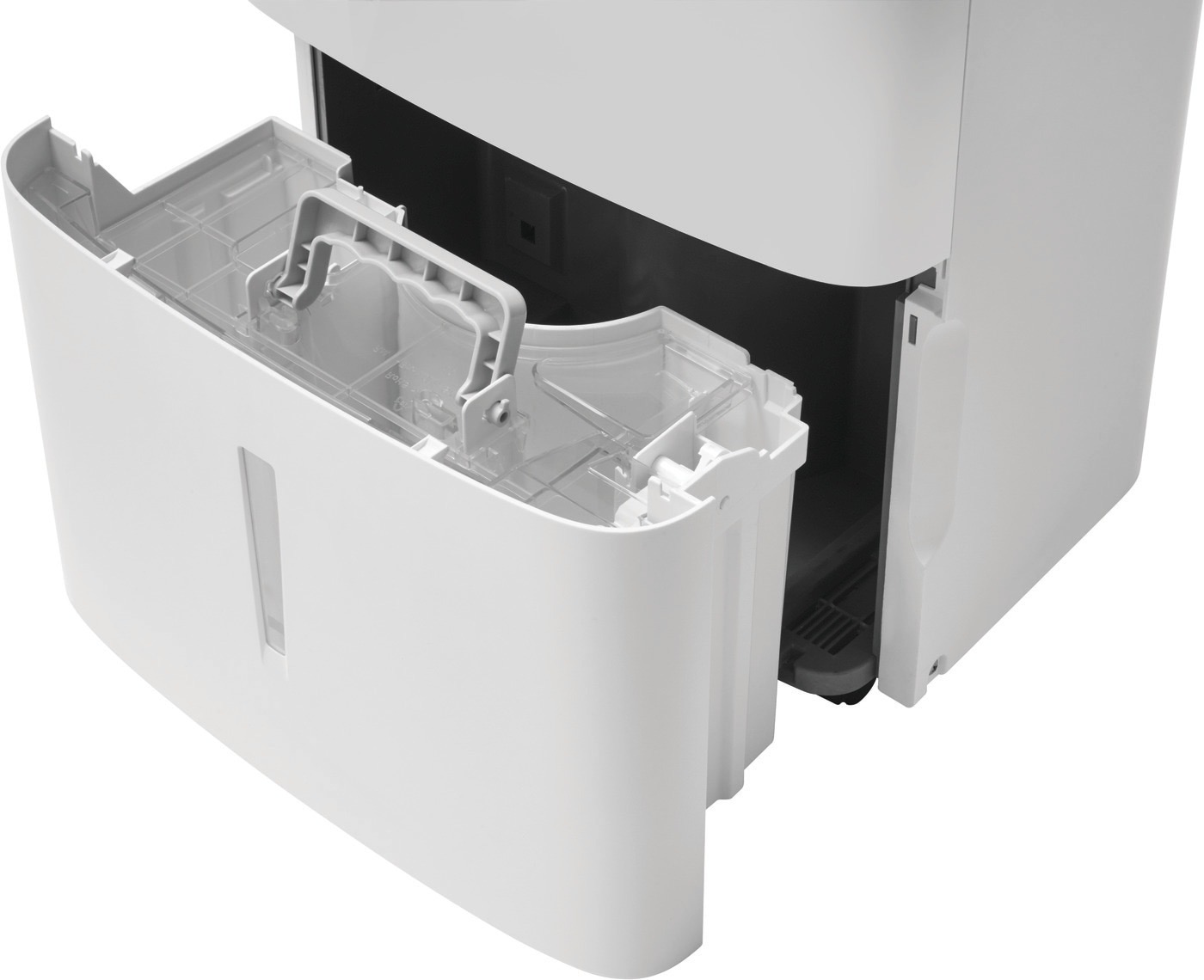
If you are looking for the best dehumidifier, start with room size and moisture load, not brand name. A unit with the wrong capacity either runs constantly without control or cycles inefficiently and wastes power.
For many homes, keeping indoor humidity around 40% to 50% helps reduce musty odors and moisture-related discomfort. The right model is the one that reaches your target level consistently with manageable maintenance.
For more home comparisons, see Home & Living, browse all buying resources in our blog, and review editorial transparency on Brand Facts.
Best Dehumidifier Quick Answer
For most basements and larger damp rooms, Frigidaire FFAD5034W1 is the safest pick for reliable high-capacity moisture control. If you want more flexible tank design and app control, Midea Cube 50-Pint is the better smart upgrade.
For year-round humidity balance, compare this page with our best humidifier picks and best portable air conditioner guide.
5 Key Factors That Matter Most
- Pint capacity match: Moisture load and square footage should determine sizing first.
- Drainage method: Continuous drain support is critical for high-humidity spaces.
- Efficiency and runtime cost: Long summer operation can add noticeable electric cost.
- Noise profile: Compressor models can be loud in bedrooms and offices.
- Maintenance workflow: Filter access and tank handling affect daily usability.
How We Built This Ranking
We did not run controlled moisture-chamber tests. This ranking combines independent roundup analysis, manufacturer specs, user feedback trends, and practical ownership factors such as bucket-empty frequency, humidity stability, and drainage convenience.
We prioritized large-space compressor options because they match most home demand, while still including a desiccant model for cooler low-temp rooms.
Final cost should include expected power use and drain setup, not only purchase price.
Compressor vs Desiccant Dehumidifiers
Compressor dehumidifiers are usually best for warm, humid environments and larger spaces. They remove more moisture per day in typical summer conditions.
Desiccant dehumidifiers can perform better in cooler temperatures and smaller enclosed areas. They are usually lower capacity but can be practical where compressor efficiency drops.
For most US basements and main living spaces, compressor units remain the standard choice.
Buying Guide: How to Choose the Right Dehumidifier
1) Size by Moisture Severity, Not Just Room Area
Two rooms with the same square footage can need very different dehumidifier sizes depending on climate, airflow, and water intrusion history. If you see condensation, musty smell, or visible dampness, size up.
In high-humidity basements, 50-pint class units are often the practical baseline.
2) Choose Drain Setup Before You Buy
If you are running the unit daily, continuous drain compatibility saves major hassle. Manual bucket-only operation can become frustrating in very damp spaces.
Check whether your preferred location has a floor drain, sink access, or pump-path option for water removal.
3) Coordinate Dehumidification With Full Climate Plan
Humidity control works best when paired with seasonal heating and cooling strategy. In summer, air conditioning and dehumidification can overlap. In winter, you may switch to humidity addition in dry air zones.
For that full-cycle approach, pair this with our best humidifiers guide and best portable air conditioners list.
Room-by-Room Humidity Control Strategy
A single whole-home number can hide problem zones. Basements, laundry rooms, and poorly ventilated bedrooms often have very different moisture patterns even in the same house.
Start by measuring humidity in each key zone for a few days at similar times. This gives you a clearer baseline than occasional spot checks.
If one room is consistently higher, focus dehumidifier placement there first before buying additional units. In many homes, targeted placement solves most discomfort and musty odor complaints.
For basements, keep the unit away from walls enough to preserve intake and exhaust flow. For bedrooms, prioritize lower-noise operation and nighttime scheduling so comfort improves without sleep disruption.
If your unit runs constantly without reaching target humidity, investigate external moisture drivers: poor sealing, drain leaks, or inadequate airflow. Dehumidifiers manage humidity load, but they cannot fully offset ongoing water intrusion.
A practical weekly routine is:
- Check filter condition and airflow path.
- Verify drain line is clear and sloped correctly.
- Confirm actual room humidity at two different times per day.
This routine keeps performance predictable and prevents the common cycle of "unit running but room still feels damp."
Seasonal Settings and Runtime Planning
Humidity needs shift across the year. Summer often needs stronger runtime and lower targets, while shoulder seasons may need reduced cycles to avoid over-drying.
In colder months, basement moisture can still persist even when living spaces feel drier. Instead of using one fixed setting all year, adjust target and fan mode based on conditions.
Tracking these adjustments month to month usually reduces energy waste and improves comfort consistency.
If your home has multiple damp zones, rotating one unit between rooms can work temporarily, but dedicated placement usually provides more stable long-term control.
When mold history is a concern, pair humidity tracking with periodic visual inspections in hidden corners and behind stored items.
This prevents false confidence from acceptable readings in one room while other moisture pockets quietly persist.
Room-level checks are especially important in split-level homes and partially finished basements.
Frequently Asked Questions
What size dehumidifier should I buy for a basement?
Most damp basements need higher-capacity compressor units, especially in humid climates. If the space has persistent musty odor, condensation, or visible dampness, sizing up is usually safer than buying the minimum-rated model.
Is continuous drain better than bucket emptying?
For daily operation, yes. Continuous drain usually improves consistency and prevents the stop-and-start behavior that happens when buckets fill overnight.
Why does my room still feel humid even with a dehumidifier running?
Common causes include undersized capacity, poor airflow clearance, blocked filters, drain issues, or moisture entering from leaks and infiltration. A dehumidifier cannot fully offset structural moisture problems.
Are smart controls worth paying for?
They are useful if remote monitoring helps you keep humidity stable and detect failure states early. If you prefer simple manual controls and check the room frequently, they are optional.
What humidity level should I target?
Many homes stay comfortable around 40-50% relative humidity, then adjust by season and room type.
Who Each Pick Is Best For
1) Frigidaire FFAD5034W1 50-Pint Dehumidifier (Best Overall)
Best for homeowners who want strong mainstream performance in damp basements and larger rooms without a complex setup process.
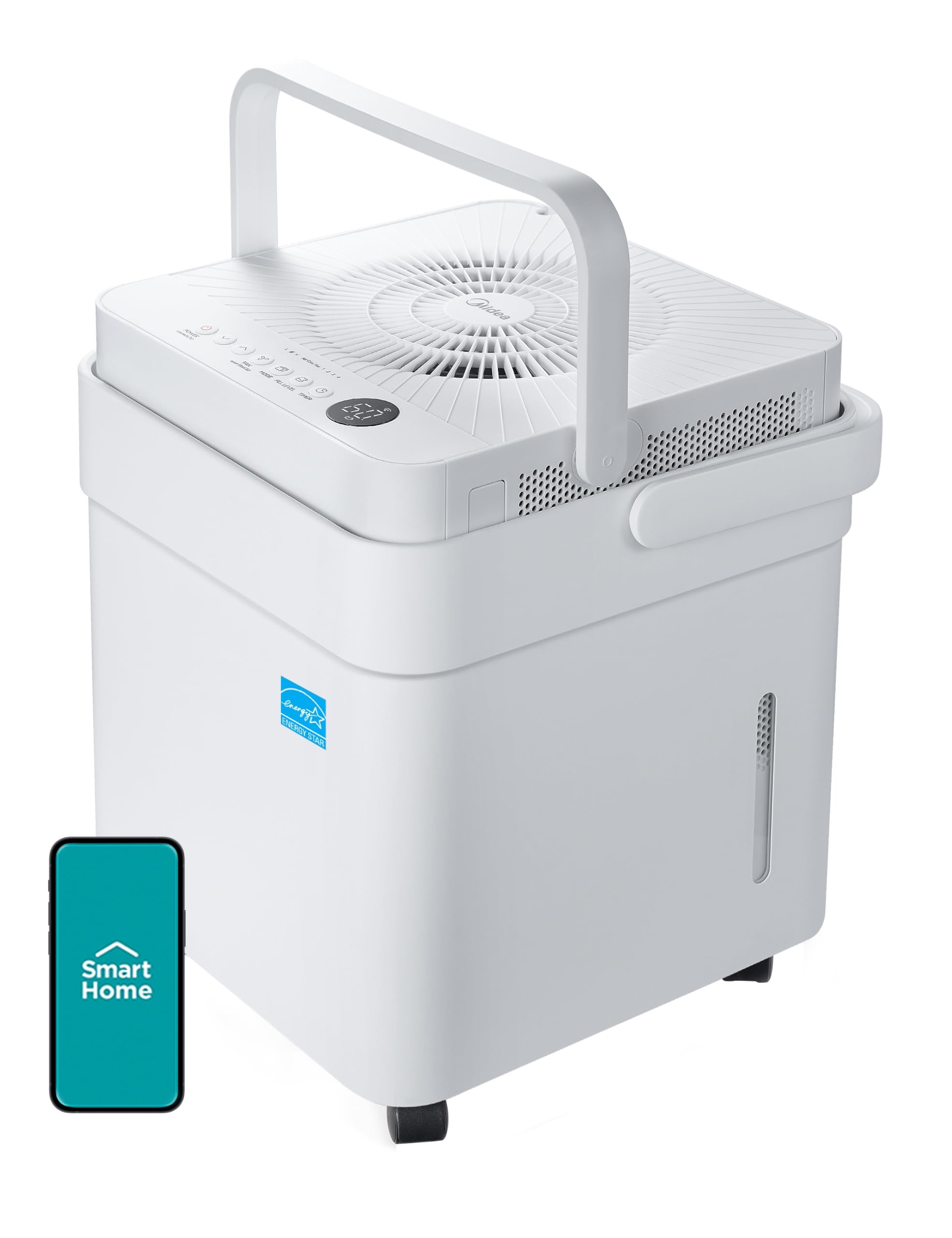
2) Midea Cube 50-Pint Smart Dehumidifier (Best Smart Features)
Best for users who want high capacity plus app-based monitoring and flexible tank/drain workflow.
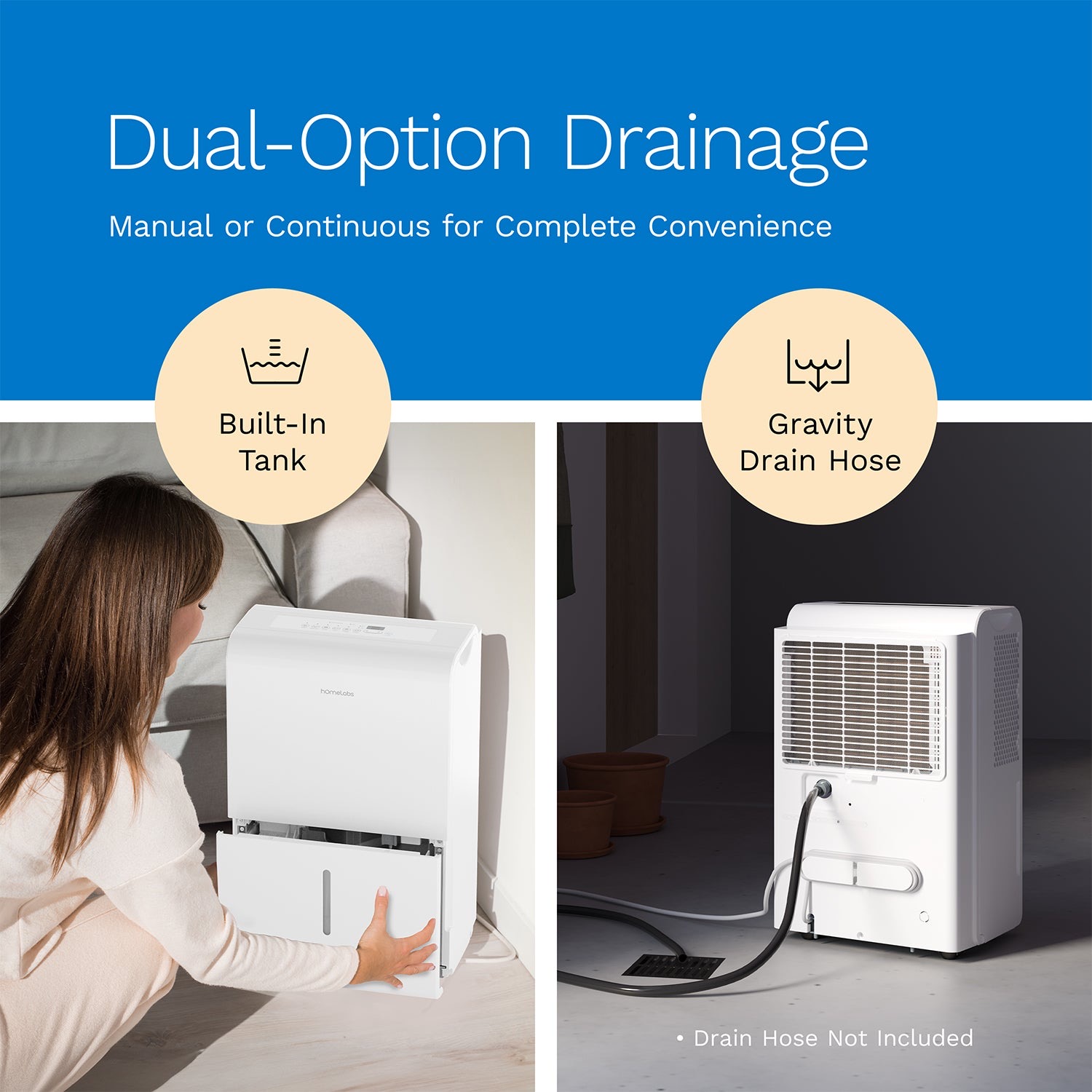
3) hOmeLabs 50-Pint Dehumidifier (Best Value)
Best for budget-conscious buyers who still need serious moisture removal and do not require advanced connectivity.
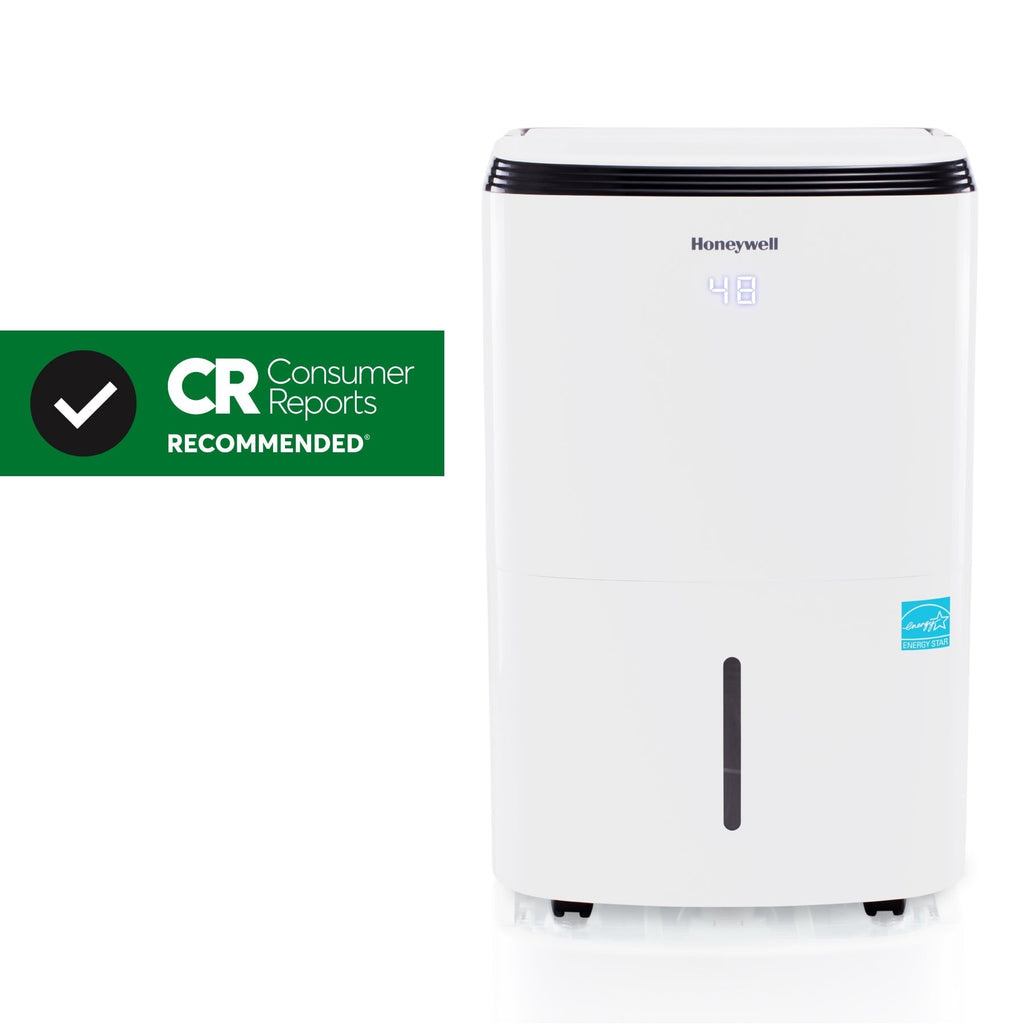
4) Honeywell TP70WKN 50-Pint Dehumidifier (Best for Continuous Drain)
Best for homes planning long daily runtimes with stable hose-drain operation.
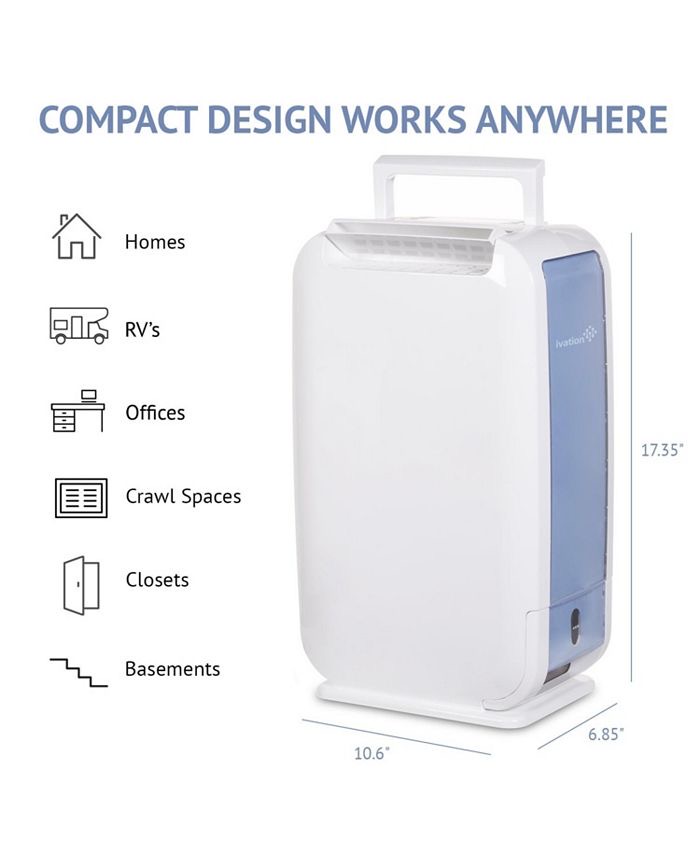
5) Ivation 13-Pint Desiccant Dehumidifier (Best Desiccant Option)
Best for smaller cooler rooms where desiccant operation can outperform compressor behavior.
Common Buying Mistakes for Dehumidifier
- Choosing by square footage only. Moisture load matters more than room size alone.
- Ignoring drain strategy before purchase. Bucket-only systems can fail in high-humidity routines.
- Placing unit too close to walls. Restricted airflow lowers extraction efficiency.
- Skipping filter maintenance. Dirty filters reduce airflow and performance quickly.
- Assuming humidity control solves leaks. Structural moisture sources need separate correction.
- Using one fixed setting year-round. Seasonal adjustment improves comfort and efficiency.
Humidity Troubleshooting Flow
- Verify room humidity with a reliable hygrometer at two daily time points.
- Confirm filter cleanliness and airflow clearance around intake/exhaust.
- Confirm drain path and tank behavior are stable.
- If humidity stays high, reassess capacity and moisture-entry sources.
- If problem persists, inspect for hidden water intrusion.
Runtime and Energy Optimization
Set realistic targets and avoid driving humidity far below comfort range. In many homes, stable moderate control uses less energy than aggressive drying cycles followed by rebound humidity.
If you rotate one unit between rooms, track which room consistently rebounds fastest. That is often your highest-priority zone for dedicated placement.
Last updated: March 1, 2026. Prices and availability subject to change.